
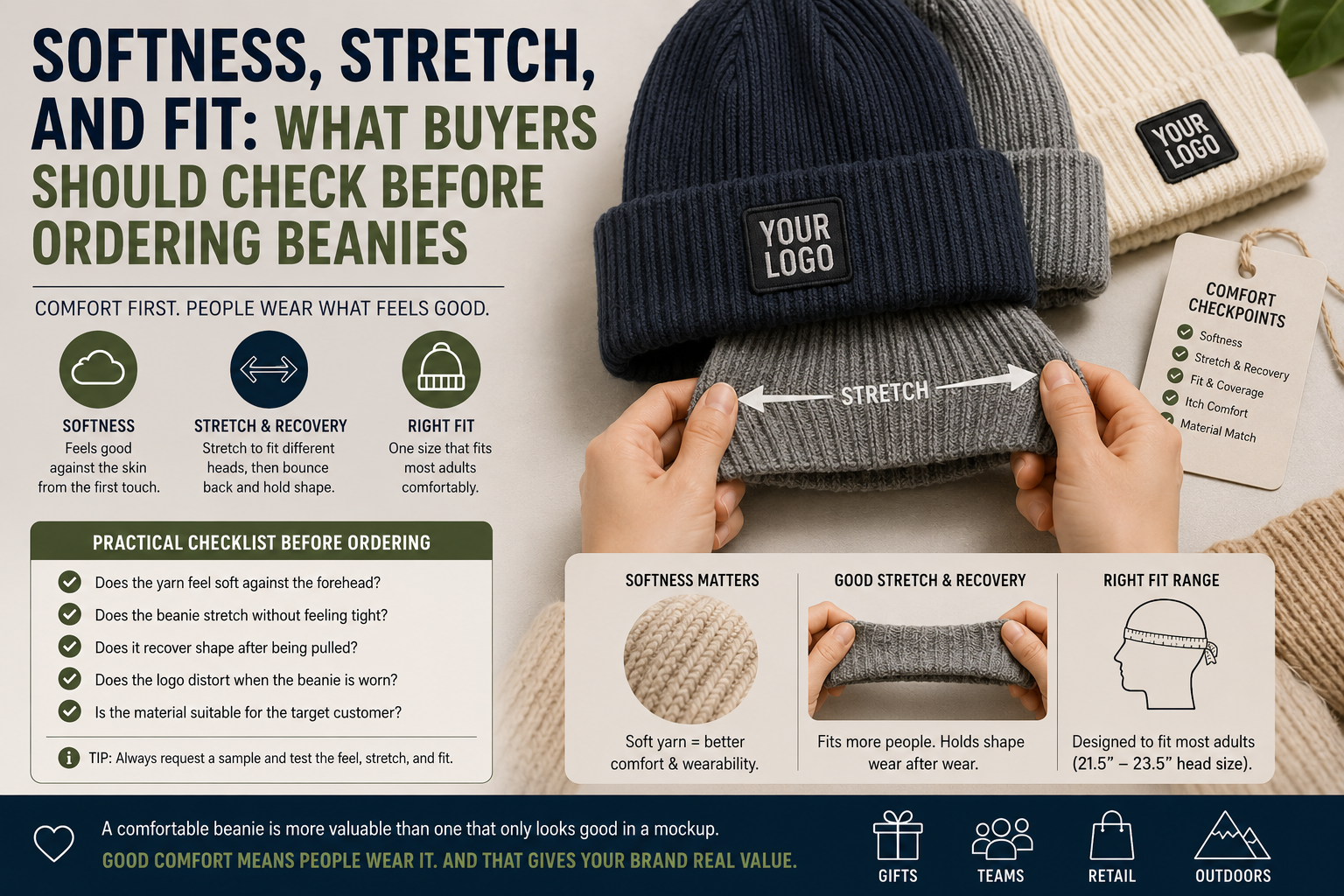
A beanie can have the right color, logo, and style, but if it feels uncomfortable, people will not wear it often. Comfort is one of the most important factors in beanie orders because the product touches the forehead, ears, and hair directly.
Softness, stretch, and fit should be checked before confirming a bulk order. These details affect whether the beanie becomes useful merchandise or just another item people keep in a drawer.
Softness Affects First Impressions
People judge a beanie quickly when they touch it. If the yarn feels rough, stiff, or scratchy, the product may feel low quality even if the logo looks good.
Softness depends on fiber type, yarn quality, knit structure, finishing, and lining. A basic acrylic beanie can feel soft if the yarn is good. A wool beanie can feel premium, but some wool types may feel itchy for sensitive wearers.
For gift orders or retail merchandise, softness should be treated as a key product feature, not an afterthought.
Stretch and Recovery Matter for Group Orders
Most adult beanies are made as one-size items. A practical adult fit often needs to cover about 21.5–23.5 inches in head circumference. The knit must stretch enough to fit different people, then recover so the beanie does not become loose after repeated wear.
Poor stretch recovery can make the product look tired quickly. Too little stretch can make the beanie uncomfortable. Ribbed knit, medium-weight yarn, and balanced construction usually help the product fit more people.
For buyers ordering custom beanies, fit should be reviewed together with logo placement. A beanie that stretches heavily may change how the logo sits when worn.
Itchiness Can Hurt Wearability
Itchiness is a common issue in winter accessories. It may come from rough yarn, certain wool fibers, poor finishing, or a tight fit around the forehead.
If the beanie is for a mixed group, comfort risk is higher because some people may be more sensitive to texture. In that case, soft acrylic, wool blends, cotton blends, or fleece lining may be considered depending on the product goal.
Material Choice Should Match the Audience
Acrylic is often practical for large group orders because it is easier to care for, available in many colors, and usually more cost-controlled. Wool or wool blends may suit premium merchandise, outdoor collections, or cold-weather positioning.
A buyer comparing beanie material options should think about softness, warmth, itch risk, care instructions, and price positioning.
Practical Checklist Before Ordering
Before approving a beanie, check:
- Does the yarn feel soft against the forehead?
- Does the beanie stretch without feeling tight?
- Does it recover shape after being pulled?
- Does the logo distort when the beanie is worn?
- Is the material suitable for the target customer?
Conclusion
A comfortable beanie is more valuable than a product that only looks good in a mockup. Softness, stretch, and fit determine whether people actually wear it.
Before placing a larger order, buyers should test how the beanie feels, not just how it looks. Good comfort improves repeat use, and repeat use is what gives branded merchandise real value.
READ ALSO: New Platform Opportunities Marketers Are Watching
